For frontline clinicians

Educational and clinical reference resources

The signs and symptoms of FTD can be challenging to recognize – not only for family members and loved ones, but for health and medical professionals as well. These difficulties often lead to misdiagnoses with other neurodegenerative or psychiatric conditions, or to a delayed diagnosis with FTD overall.

To support improved understanding and identification of FTD, we have created tools and guides with comprehensive information about, and recommendations for assisting, those who may be affected by the disease. They are designed for primary care clinicians, emergency medicine professionals, and mental health practitioners.

What’s in the toolkit

  • FTD 101 for Frontline Health ProfessionalsThe complete 42-page toolkit, with every guide below included.
  • Rapid Decision TreeSpot uncharacteristic changes and know when to refer.
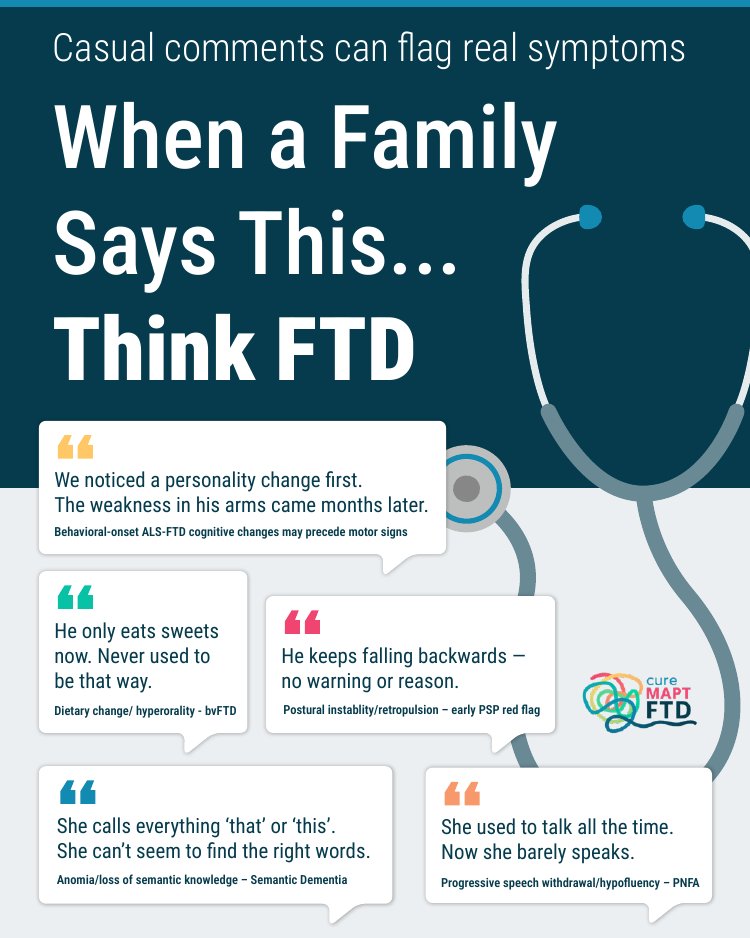
  • When a Family Says This… Think FTDTurn caregiver comments into recognizable symptoms.
  • Know the Red FlagsSigns across the full FTD spectrum and common misdiagnoses.
  • FTD vs Other DiagnosesTell FTD apart from depression, bipolar disorder, Alzheimer’s and more.
  • Symptom Comparison ChartInitial changes in FTD, Alzheimer’s, psychotic disorders and depression.
  • bvFTD Recognition & Referral PathwayA five-layer path from first complaint to diagnosis.

Free to download. Complete the short form and you’ll go straight to the full toolkit and all six guides.

Request access

Three quick questions, then you’ll go straight to the PDFs.

How much do you know about frontotemporal dementia (FTD)? *
Do you see patients in your practice who may be showing signs of dementia? *
If yes, do you refer those patients to dementia clinics or specialists in neurodegenerative disorders? *
Do you currently have materials in your practice to help when screening patients for dementia? *
Thank you! Taking you to the toolkit…
Oops! Something went wrong while submitting the form.